Morocco’s manufacturing boom: What it means for European supply chains

As European businesses continue to rethink their supply chains in response to global disruption, one country is rapidly moving into focus: Morocco.
 The north African country is emerging as a key manufacturing and logistics hub for Europe - particularly in automotive and industrial production.
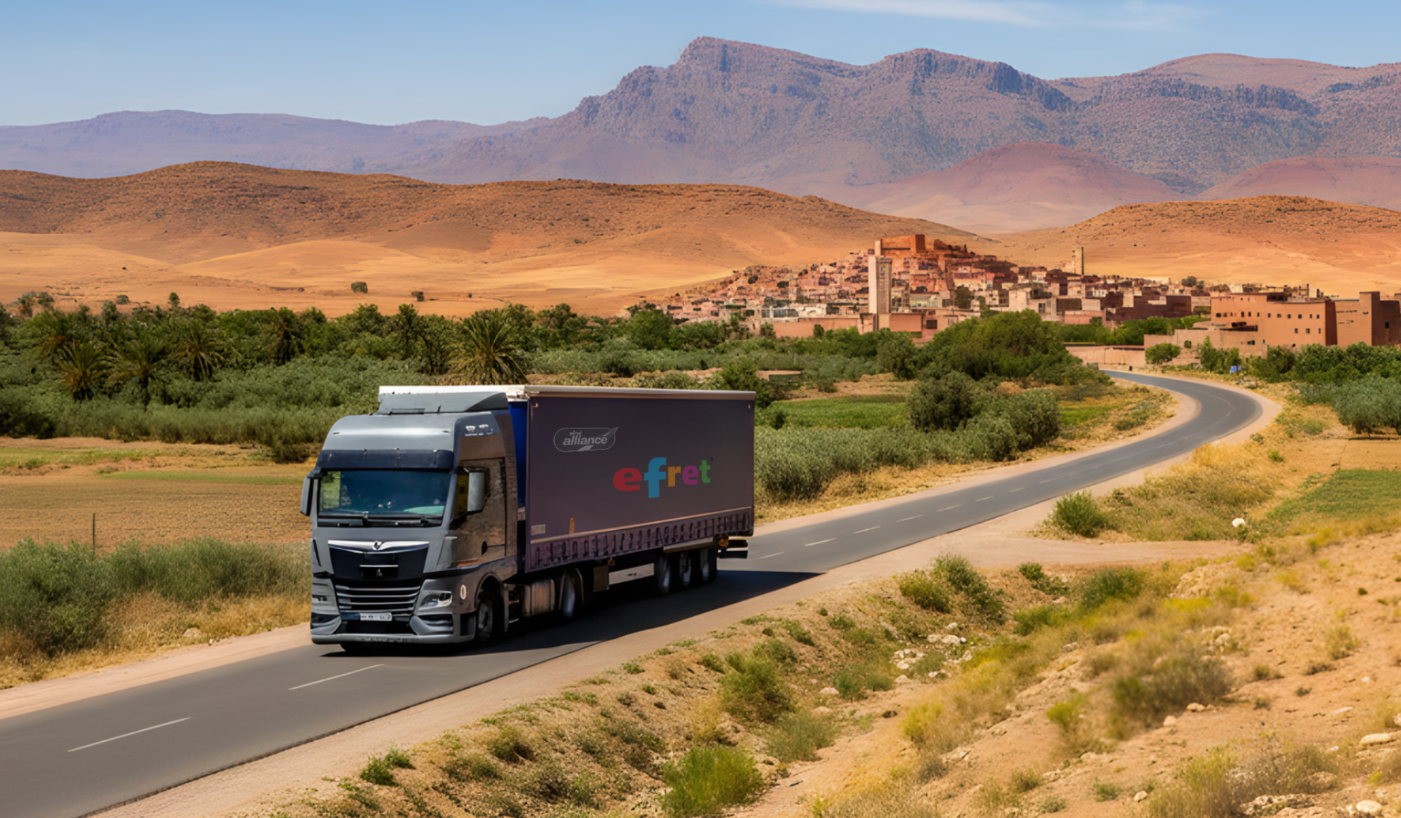 The north African country is emerging as a key manufacturing and logistics hub for Europe - particularly in automotive and industrial production.
This shift is not only transforming trade flows but also redefining how companies approach nearshoring, resilience, and logistics strategy. For Efret, which has spent the past two years developing its Europe-UK–Morocco road freight operations, the evolution of this corridor offers valuable insight into both current demand and future opportunity.
Morocco’s rise as a manufacturing hub
Morocco’s transformation into a manufacturing powerhouse has been driven by strategic investment, geographic advantage, and strong trade relationships with Europe.
The country has built a thriving automotive sector, supported by global manufacturers and an expanding network of suppliers. Alongside automotive, Morocco is growing its footprint in aerospace, renewable energy, and industrial manufacturing - sectors that are increasingly critical to European supply chains.
What makes Morocco particularly attractive is its ability to support just-in-time manufacturing. Its proximity to Europe allows goods to move quickly and predictably, enabling manufacturers to reduce inventory costs and improve production efficiency.
Why Morocco is critical for European supply chains
For European businesses, Morocco offers a compelling alternative to long-distance sourcing from Asia.
- Proximity: Located just 14 kilometres from Spain, Morocco enables significantly shorter transit times into Europe
- Cost efficiency: Lower production costs compared to Western Europe
- Trade stability: Agreements such as the Morocco–UK Association Agreement ensure continuity and reduced trade barriers
- Scalability: Growing industrial capacity supports increasing demand
Efret’s own analysis of the Morocco–UK trade framework highlights how the agreement has helped maintain smooth trade flows post-Brexit, giving UK and EU businesses confidence to invest in Moroccan supply chains.
The result is a supply chain model that is faster, more flexible, and more resilient - qualities that are now essential in today’s global trade environment.
The growing importance of Europe-UK-Morocco road freight
As Morocco’s manufacturing output increases, the logistics infrastructure connecting it to Europe becomes a critical success factor. While sea freight remains important, road freight between Morocco and Europe is becoming increasingly vital - particularly for time-critical goods.
Efret’s investment in this corridor reflects this shift. In early 2024, the company launched a dedicated UK to Morocco road freight service, designed to meet growing demand for reliable, end-to-end logistics solutions.
The service offers:
- Scheduled weekday departures from the UK
- Transit times of just 5–7 days door-to-door
- Full UK and Morocco coverage
- Integrated customs clearance expertise
This development was driven by a clear need in the market: businesses looking to streamline supply chains, reduce lead times, and expand into Morocco’s rapidly growing industrial base.
For manufacturers operating just-in-time models, road freight provides a level of speed, flexibility, and reliability that is difficult to achieve through traditional sea routes alone.
Two years in the Morocco market: Efret’s retrospective
Efret’s two-year journey in the Morocco market highlights how quickly this corridor has evolved from emerging opportunity to strategic priority.
1. Demand has accelerated rapidly
What initially appeared as a niche route has developed into a high-demand trade lane. Automotive and manufacturing clients are increasingly relying on Morocco as a production base, driving consistent growth in freight volumes.
2. Reliability is more important than cost
One of the clearest lessons is that businesses prioritise reliability over price. Consistent transit times, efficient customs processes, and clear communication are essential for maintaining production schedules.
3. Flexibility is now essential
Supply chains are becoming more dynamic. Clients require flexible transport options, including both full truckload (FTL) and groupage (LTL) services, allowing them to adapt to fluctuating demand.
4. Local expertise is a competitive advantage
Operating effectively in Morocco requires in-depth knowledge of local infrastructure, regulations, and border processes. Building strong local partnerships has been key to ensuring smooth operations.
Opportunities for future growth
Morocco’s role in European supply chains is set to expand even further, driven by several key trends.
Nearshoring and supply chain resilience
European companies are increasingly moving production closer to home to reduce risk and improve responsiveness. Morocco offers a strategic balance of proximity, cost efficiency, and industrial capability.
Growth of the automotive and EV sector
Morocco is positioning itself as a major player in the future of mobility, with investment in electric vehicle (EV) supply chains and component manufacturing. This will further strengthen its ties to European industry.
Increasing Europe-UK–Morocco trade
Trade volumes between Europe the UK and Morocco continue to grow, supported by stable agreements and improving logistics infrastructure. This creates ongoing demand for efficient, scalable transport solutions.
Demand for integrated logistics solutions
Businesses are looking for partners who can deliver seamless, end-to-end supply chain solutions - combining road freight, customs expertise, and multimodal transport options.
What this means for European businesses
Morocco’s manufacturing boom offers clear strategic advantages for companies looking to optimise their supply chains:
- Shorter lead times improve responsiveness to market demand
- Reduced risk compared to long-distance global sourcing
- Improved sustainability through shorter transport routes
- Greater supply chain control through regional partnerships
However, these benefits can only be realised with reliable logistics infrastructure in place. Choosing the right transport partner is critical to ensuring consistency and minimising disruption.
A strategic shift in supply chain thinking
The rise of Morocco reflects a broader shift in how supply chains are designed. Businesses are moving away from complex, global networks toward more regional, resilient models.
Morocco is ideally positioned within this new framework. It offers:
- Close proximity to European markets
- Strong and growing manufacturing capabilities
- Stable and supportive trade agreements
- Increasingly sophisticated logistics networks
For many companies, it is no longer a secondary option - it is becoming a core component of European supply chain strategy.
Conclusion: A corridor of opportunity
Morocco’s manufacturing boom is reshaping the future of European supply chains. As production capacity grows and trade volumes increase, the importance of reliable logistics connections will only intensify.
Efret’s experience over the past two years demonstrates both the scale of the opportunity and the importance of investing in the right infrastructure, expertise, and partnerships.
With dedicated UK–Morocco road freight services now in place and demand continuing to rise, the corridor is set to become one of the most important trade routes for European industry.
For businesses looking to build resilient, efficient, and future-ready supply chains, the message is clear: Morocco is no longer an emerging market - it is a strategic gateway to the future of European manufacturing.
To learn more about how our Morocco road freight service can help your business expand into this rapidly growing market, contact our team.
Articole recente

How do major sports events manage European logistics?
26th August 2026 3 minute read
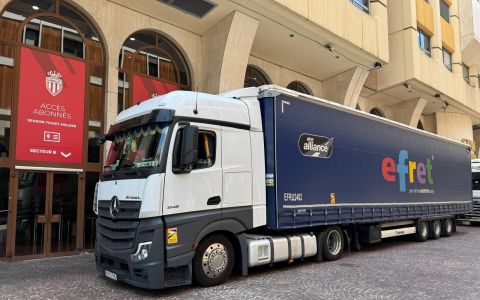
Efret races against time to deliver vital race day equipment for Europe’s 2026 premier athletics events
9th July 2026 2 minute read
How Efret is redefining time-sensitive European freight transport
29th April 2026 4 minute read
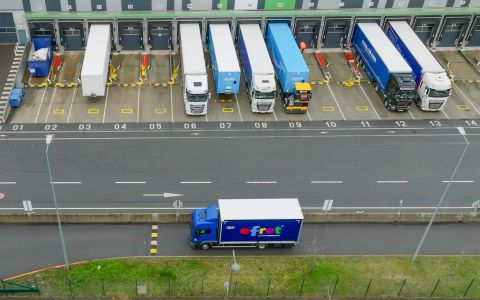
Efret embraces recent customs clearance changes with innovation, expertise and investment
1st April 2026 3 minute read